
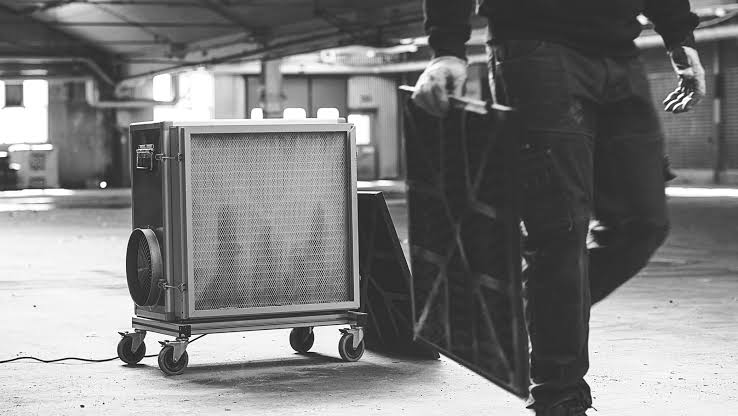
A rental described as HEPA should not be interpreted as a promise to remove every odour or solve every indoor-air concern. Ask what the supplied configuration is intended to address and how it fits the assessed problem. A useful equipment enquiry distinguishes the household’s complaint from the filter label, with the source of the concern investigated where appropriate.
Keep the complaint separate from the filter label
Describe what prompted the enquiry without beginning with a preferred machine. A homeowner may have noticed an odour after work, visible dust or another change in a room. Those observations do not all describe the same kind of problem. State what is known about the activity or event and what remains uncertain. The provider can then explain its equipment within that context rather than guessing what “cleaner air” means to the caller.
Do not use smell alone to diagnose a source or declare a room safe. If the concern may involve hazardous materials, combustion, contamination or another serious condition, obtain the appropriate qualified response. Renting a device should not delay help or become permission to continue an uncertain activity. The equipment discussion belongs within an understood application, not in place of the assessment the situation requires.
The EPA’s air-cleaner guidance distinguishes particle filtration from approaches to gases and emphasizes that air cleaning has limits. For a buyer, the implication is to ask about the actual concern and supplied filtration. One familiar acronym cannot stand in for an explanation of every pollutant, source or outcome associated with the property.
Ask what the supplied configuration addresses
Drying Equipment’s air-purifier rental information offers a Toronto category to discuss with the supplier. Confirm the actual unit and supplied filters for the booking. If the intended application is being directed by a contractor or other qualified professional, include that person in the suitability conversation. The homeowner should not have to infer configuration from a photograph or an old product name.
Ask the provider to describe the relevant capability and its limits without broad language. What does the supplied equipment address for this declared use? What does it not establish? If a different filter or accessory is proposed, have the responsible person review it and confirm availability and instructions. Do not improvise additions because an online discussion suggested that another material can be placed inside a machine.
Keep the wider project controls visible. An equipment rental can be one part of a plan that also addresses the source and the work method. The responsible professional should explain those relationships where relevant. A homeowner may be purchasing only the rental transaction, so it is especially important to know which separate service is assessing and managing the underlying issue.
Clarify who will operate the machine and handle any filter-related responsibilities appropriate to the application. A consumer paying for a rental should not automatically be expected to maintain or dispose of material without the necessary guidance and competence. Ask for the actual instructions and contact route. The scope should be resolved before equipment arrives, not assigned casually to whoever first notices a question during use.
Challenge absolute language in a quotation
Phrases such as “removes everything” or “makes the room completely safe” should prompt a request for clarification. Ask what specific, supportable result the supplier or contractor means and what assessment supports it. Put the clarified description in the accepted scope so the person receiving the equipment does not continue to rely on the earlier broad phrase. This is particularly helpful when a quotation passes between a homeowner, contractor and property contact. There may be a reasonable limited service hidden behind loose wording. Bringing that service into plain language makes the agreement easier to understand and avoids building expectations around a claim no device can establish by its presence alone.
Distinguish an equipment specification from a property outcome. Documentation may describe the unit’s filtration or operating characteristics. It does not automatically describe all pollutants in an individual building or certify how the work has been performed there. Keep the actual source of each claim attached to it. A manufacturer’s equipment statement and a professional’s site finding should not be merged into a larger guarantee neither made.
Do the same when comparing quotes. One offer may include equipment only, while another includes an assessed service scope. Those are different purchases. Compare what is supplied, who does the work and which limitations remain, rather than ranking the offers by whichever uses the most reassuring phrase. A precise quotation can be more useful even when its wording is less impressive.
Review the original concern after the equipment period
At the agreed review, ask the responsible person what has been established about the complaint that started the enquiry. A change in perceived odour is an observation, but it should not automatically be treated as confirmation that the source has been resolved. Follow the appropriate assessment process for the actual issue and retain the resulting explanation.
Close the rental under the provider’s terms and keep that record distinct from any professional findings. If further work or investigation is recommended, document who will handle it and what information is needed. Do not let a returned machine create a false sense that every related question is closed simply because the equipment transaction is complete.
A good air-cleaner enquiry ends with a defined purpose and understandable limitations. That is more useful than a promise to remove every trace of an odour or make all concerns disappear. Ask the supplier and responsible assessor to explain the actual application, so the rental can be judged for what it contributes and the original problem receives the attention it requires.
About the Author